An unexpected medical bill, a sudden job loss, an urgent home repair or an unplanned family expense can put pressure on your finances. Even if you earn a regular salary, one unexpected expense can disturb your monthly budget when you do not have money set aside for emergencies.
This is why building an emergency fund in India is an important part of financial planning. It gives you a financial cushion to handle unexpected expenses without immediately relying on credit cards, personal loans or money meant for long-term investments.
The good news is that you do not need to save a large amount overnight. You can start with a small, manageable target and build your emergency savings gradually.
In this guide, you will learn what an emergency fund is, how much you may need, where to keep it and how to build one on a regular income.
What Is an Emergency Fund?
An emergency fund is money reserved specifically for unexpected and essential expenses. It is different from savings meant for a holiday, shopping, a new phone or a planned purchase.
The main purpose of an emergency fund is to help you manage financial uncertainty without disrupting your essential expenses or long-term financial goals.
Examples of expenses an emergency fund may cover include:
- Unexpected medical expenses not covered by insurance.
- Essential household or vehicle repairs.
- A temporary loss of income or job.
- Urgent family expenses.
- Essential travel due to a family emergency.
- Necessary expenses during a delay in salary or other income.
An emergency fund should be accessible when you need it. Its primary purpose is financial security, not generating the highest possible investment return.
How Much Emergency Fund Should You Have in India?
A commonly used starting point is to save three to six months of essential living expenses. However, the right amount depends on your income stability, family responsibilities, existing insurance and financial commitments.
For example, someone with a stable salary, low fixed expenses and fewer dependants may be comfortable starting with a smaller target. Someone who is self-employed, supports family members or has an uncertain income may need a larger reserve.
Emergency Fund Calculation Example
Suppose your essential monthly expenses are as follows:
| Expense | Monthly Amount |
|---|---|
| Rent | ₹12,000 |
| Groceries and household essentials | ₹4,000 |
| Electricity, phone and internet | ₹2,000 |
| Transport | ₹3,000 |
| Insurance and medical essentials | ₹2,000 |
| Loan EMIs and other essential commitments | ₹7,000 |
| Total essential expenses | ₹30,000 |
Based on these expenses, your emergency fund target would be:
| Coverage Period | Target Amount |
|---|---|
| 1 month | ₹30,000 |
| 3 months | ₹90,000 |
| 6 months | ₹1,80,000 |
| 9 months | ₹2,70,000 |
These figures are illustrative. Your actual target should be based on your own essential expenses.
If you are starting from zero, you do not have to wait until you have ₹90,000 or ₹1,80,000 saved. Begin with a smaller milestone, such as ₹10,000 or one month of essential expenses, and build from there.
How to Calculate Your Emergency Fund Target
Follow these steps to calculate a realistic target.
Step 1: List Your Essential Monthly Expenses
Calculate the expenses you would still need to pay if your income stopped temporarily. Include rent, groceries, utility bills, transport, essential insurance premiums, medical needs and unavoidable loan repayments.
Separate these expenses from discretionary spending, such as entertainment, dining out, shopping and subscriptions you could pause during an emergency.
Step 2: Choose Your Coverage Period
Use three months of essential expenses as an initial target if you need a starting point. Consider working towards six months or more if your income is variable, your household depends on one earner or finding a new job could take time.
Step 3: Adjust for Your Personal Situation
Your emergency fund should reflect your real financial responsibilities. Consider dependants, insurance coverage, job stability, existing savings and major recurring commitments.
Do not automatically copy someone else’s target. Two people earning the same salary may need very different emergency funds because their expenses and responsibilities differ.
Where Should You Keep Your Emergency Fund?
An emergency fund should generally prioritise accessibility and capital preservation over high returns. You may use more than one suitable place to keep the money, depending on how quickly you might need it.
1. Savings Account
A savings account can be useful for keeping money that you may need immediately. It provides convenient access through common banking channels.
Check the account’s terms, minimum balance requirements, withdrawal access and applicable charges before choosing one.
2. Sweep-In or Sweep-Out Fixed Deposit
Some banks offer linked fixed-deposit facilities that can move eligible surplus funds into a deposit and make funds available when required, subject to the product’s terms.
Check withdrawal rules, premature-closure penalties, minimum amounts and how quickly the money becomes available. Do not assume every fixed deposit offers instant or penalty-free access.
3. Short-Term Deposits or Other Low-Risk Options
Depending on your circumstances, you may consider other relatively low-risk options for money that is not needed immediately. However, compare liquidity, market risk, withdrawal restrictions and potential charges carefully.
Avoid placing your entire emergency fund in investments whose value can fluctuate significantly or which may take time to sell or redeem.
Important: Eligible bank deposits in India may be covered by deposit insurance through the Deposit Insurance and Credit Guarantee Corporation (DICGC), subject to applicable rules and limits. The cover is generally up to ₹5 lakh per depositor per insured bank in the same right and capacity, including principal and interest. Review the official DICGC guidance for details.
How to Build an Emergency Fund on a Limited Salary
You do not need a high salary to begin building emergency savings. Consistency matters more than making a large deposit once and then stopping.
1. Start With a Small Monthly Target
Choose an amount you can save without missing essential bills or loan repayments. Even ₹500, ₹1,000 or ₹2,000 per month can help you build the habit.
For example, saving ₹2,000 each month would add up to ₹24,000 over 12 months, before any interest and assuming you do not withdraw the money.
2. Automate Your Savings
Set up a transfer to a separate savings account shortly after you receive your salary. Automating the transfer can reduce the temptation to spend the money first and save whatever remains.
Keep the amount realistic so that you do not have to transfer it back to pay essential expenses.
3. Review Your Monthly Budget
Check where your money goes each month. Identify expenses you can reduce without compromising necessities, and redirect part of the savings towards your emergency fund.
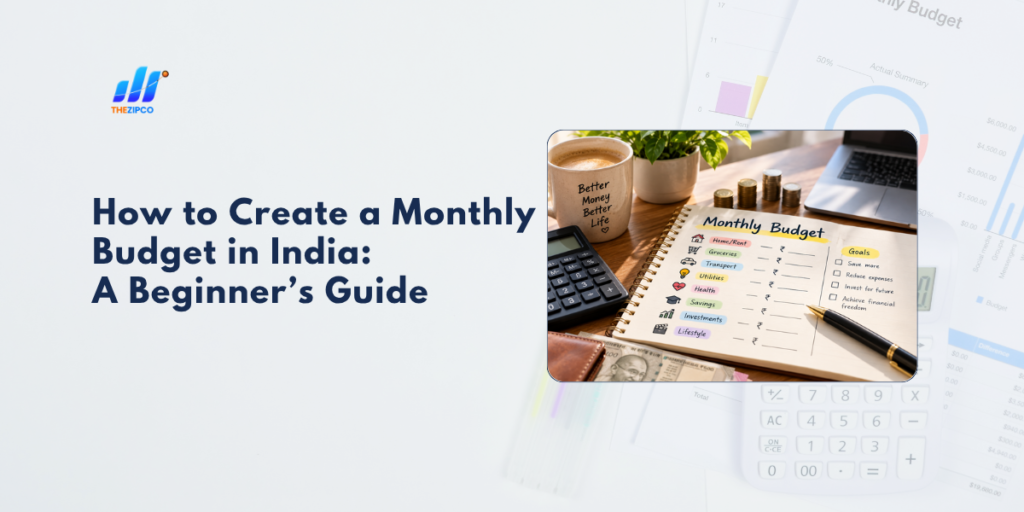
You can use our guide, How to Create a Monthly Budget in India: A Beginner’s Guide, to organise your income and expenses.
4. Use Extra Income Wisely
If you receive a bonus, incentive, tax refund or other unexpected income, consider allocating a portion to your emergency fund. You can still use part of the money for other priorities while making progress towards your target.
5. Avoid Using the Fund for Planned Purchases
Keep emergency savings separate from money for shopping, holidays, gadgets and other planned expenses. If you regularly use the fund for non-emergencies, it may not be available when a genuine financial problem occurs.
Should You Build an Emergency Fund Before Investing?
An emergency fund and investments serve different purposes. An emergency fund helps you manage unexpected expenses, while investments are generally meant to support longer-term financial goals.
If you have no emergency savings, consider building an initial cash reserve before committing large amounts to investments. This can reduce the chance of having to sell investments at an unfavourable time or borrow money during a crisis.
You do not necessarily need to stop every investment until you reach your full emergency-fund target. The right balance depends on your existing savings, debt, essential expenses and financial responsibilities.
If you are learning how to invest, read our guide on Investing for Beginners in India: A Complete Guide.
Common Emergency Fund Mistakes to Avoid
1. Keeping No Money for Emergencies
Relying entirely on your salary or credit cards can make an unexpected expense harder to manage. Start with a small target rather than waiting until you can save a large amount.
2. Investing the Entire Fund in Risky Assets
Shares and other market-linked investments can lose value. Money needed for urgent expenses should not depend entirely on favourable market conditions.
3. Ignoring Loan Repayments and Fixed Costs
When calculating your target, remember essential loan EMIs and other unavoidable commitments. Leaving them out can make your emergency fund too small.
4. Keeping the Money Difficult to Access
An emergency fund is less useful if withdrawals involve lengthy delays, substantial penalties or uncertainty. Understand the access conditions before placing your money.
5. Forgetting to Replenish the Fund
If you use your emergency savings, make a plan to rebuild them. Review the target whenever your rent, family responsibilities, income or essential expenses change.
Frequently Asked Questions (FAQs)
1. How much emergency fund should I have in India?
A common starting point is three to six months of essential living expenses. You may need more if you have variable income, dependants or significant financial commitments.
2. Can I start an emergency fund with ₹500 per month?
Yes. Saving ₹500 per month is a reasonable way to start if that amount fits your budget. Increase the contribution when your financial situation allows.
3. Is a savings account suitable for an emergency fund?
A savings account can be suitable for money you may need quickly. Check access conditions, account charges and applicable deposit-insurance rules.
4. Should I use a mutual fund as my emergency fund?
Market-linked mutual funds can fluctuate in value, and redemption may not always provide immediate access to money. Avoid relying entirely on volatile or less-liquid investments for urgent expenses.
5. Should I pay off debt or build an emergency fund first?
The balance depends on the type and cost of debt, your existing savings and your essential expenses. Maintaining a small emergency reserve can help prevent new borrowing, while expensive debt may require urgent repayment. Consider both priorities together.
6. Can I use my emergency fund for a holiday or shopping?
It is better to keep emergency savings for unexpected and essential expenses. Save separately for planned purchases and leisure activities.
7. When should I increase my emergency fund?
Review it when your essential expenses rise, you take on new financial commitments, your household responsibilities change or your income becomes less predictable.
Conclusion
Building an emergency fund in India is a practical step towards better financial stability. It can help you manage unexpected expenses, reduce dependence on borrowing and protect money set aside for long-term goals.
Start by calculating your essential monthly expenses, choose an achievable savings target and keep the money somewhere accessible and appropriate for your needs. Review your progress regularly and replenish the fund whenever you use it.
You do not have to build the entire fund in one month. Start with what you can afford, stay consistent and gradually work towards a reserve that suits your circumstances.
Disclaimer: This article is for educational purposes only and is not personalised financial advice. Consider your own financial circumstances and verify the terms of any financial product before making a decision.
References
- Deposit Insurance and Credit Guarantee Corporation (DICGC) — official information on deposit insurance.
- Reserve Bank of India (RBI) — official banking and financial information.
- SEBI Investor — investor education and guidance on investment risks.